
Who we are
A physics laboratory working for southern Peru
LabERyA studies the use of renewable energy and the state of the environment in a region with unusual conditions: extremely high irradiance, a dry atmosphere and a city growing faster than its infrastructure.
What we do
The laboratory belongs to the School of Physics of the National University of San Agustín of Arequipa. It brings together experimental work, field measurement and modelling around two themes that are inseparable in this region: energy and the environment.
The solar energy available in Arequipa is among the highest in the world, yet its use remains marginal. At the same time, the city’s air quality and the living conditions in high-Andean housing pose measurable problems with direct consequences for health. Both are studied with the same toolbox: instruments, long data series and physics.
How we work
We measure before we model. Global solar resource databases work reasonably well over flat terrain, but they go wrong over complex topography, and the southern highlands are exactly that. A fifteen per cent error in estimated irradiance carries straight through to the sizing of an installation and can decide whether a project is viable or not.
That is why the laboratory keeps its own records and checks the models it uses against them. The same principle applies to air: particulate matter concentrations are interpreted together with the meteorology that disperses them, because without that context the data say little.
Training
A university laboratory that does not train people is just a storeroom of equipment. Physics students carry out their undergraduate and graduate theses here, do their internships and take part in field campaigns from day one, operating real instruments on open problems.
Those who pass through the laboratory learn something that is not taught in a classroom: that a measurement has uncertainty, that instruments drift out of calibration, and that much of scientific work consists of distrusting your own results until you can defend them.
Where we work
Our facilities
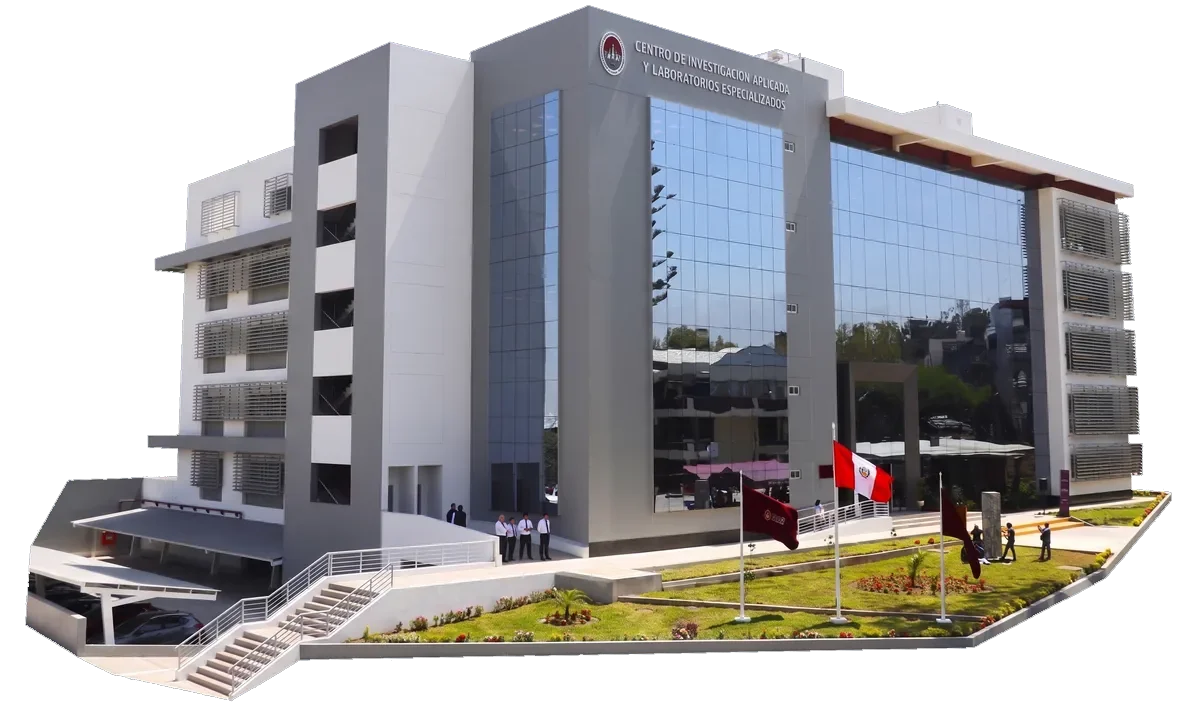
The laboratory’s work is spread across the School of Physics building, the rooftop stations and field campaigns around the region.
-
The laboratory
At the School of Physics: test benches, materials characterisation and instruments under development.
-
The rooftop stations
The BSRN radiation station and the EKO spectral station, measuring continuously on top of the School’s building.
-
Fieldwork
Measurement campaigns for solar and wind resources and air quality in the city and the region.
-
The group at work
Researchers and students operating the instruments, setting up experiments and processing data.
Need a specific test? See the laboratory’s services or write to us.