Skip to content

What we measure with

Instruments

A measurement laboratory is worth what its instruments are worth, and what is known about them. This is what we have and what each piece is for.

Measuring stations

Where we measure

The laboratory runs two solar radiation stations on the roof of the School of Physics. One provides the reference measurement; the other, the spectral detail. Together they describe the solar resource of Arequipa better than almost anywhere else in the country.

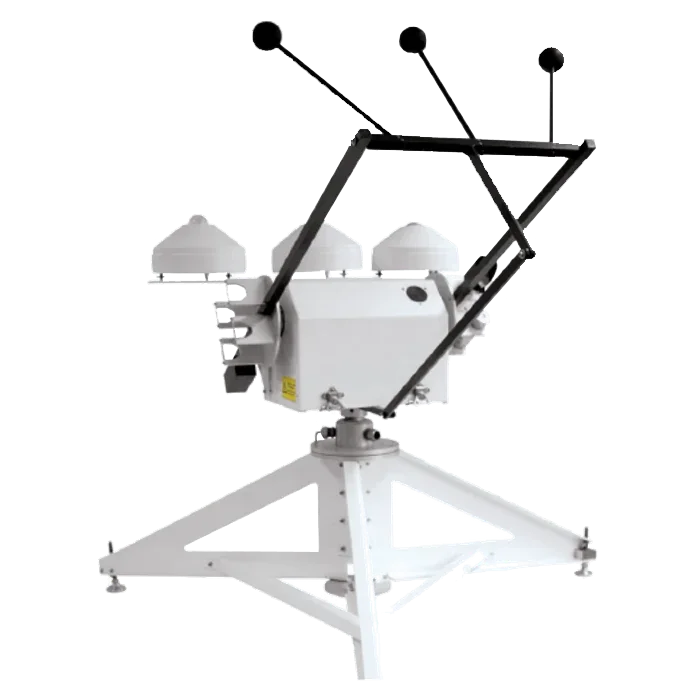
Kipp & Zonen solar tracker on a tripod, with three radiometers on the top platform and the shading balls that block the sun for the diffuse radiation sensor.
Image: Kipp & Zonen

Kipp & Zonen

BSRN radiation station

Measures separately the three components of solar radiation reaching the ground — global, diffuse and direct — with the instruments and practices of the Baseline Surface Radiation Network, the reference network for surface radiation. It is the laboratory's yardstick: the sensors built here and the solar resource estimates delivered to third parties are checked against its series.

  • Global, diffuse and direct radiation measured independently
  • Kipp & Zonen radiometers, the BSRN standard
  • Continuous logging: the laboratory's historical series come from here
  • Reference against which the in-house instruments are calibrated
Manufacturer’s website
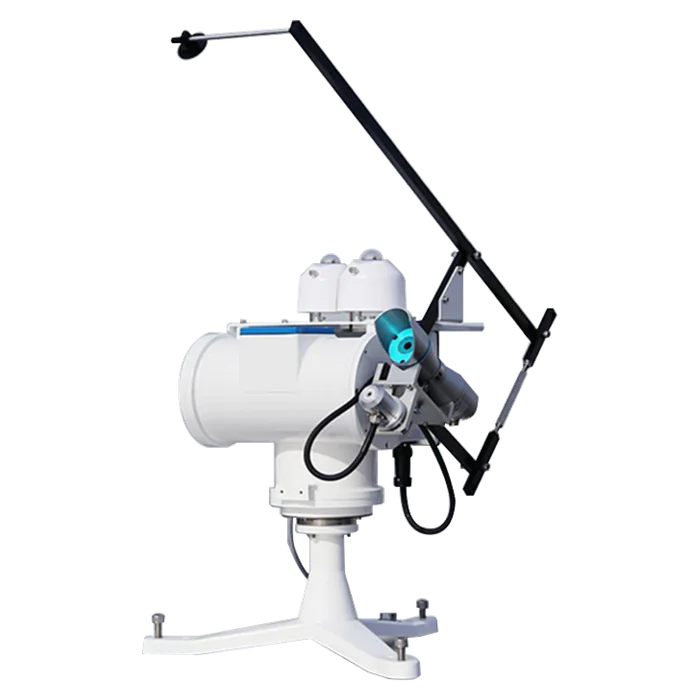
EKO STR-21G solar tracker with two radiometers and the pyrheliometer tube pointing at the sun.
Image: EKO Instruments

EKO Instruments

EKO spectral station

Two spectroradiometers working together, the MS-711 and the MS-713, which split sunlight wavelength by wavelength instead of summarising it in a single irradiance value. Together they cover 300 to 2500 nm: practically all the energy the Sun delivers at the surface. Very few stations in Peru measure the solar resource in this detail.

  • MS-711 (300–1100 nm) and MS-713 (900–2500 nm) on the same platform
  • Continuous coverage from the ultraviolet to the shortwave infrared
  • Shows what the light is made of, not just how much there is
  • Basis of the spectral response studies of photovoltaic modules
Manufacturer’s website

Instruments

The core of the laboratory

These three instruments make it possible to describe the solar resource in spectral detail and to follow the state of the atmosphere that modulates it. They were acquired through UNSA’s equipment project for metrology and calibration in renewable energy and atmospheric sciences (contract EC-25-2019-UNSA).

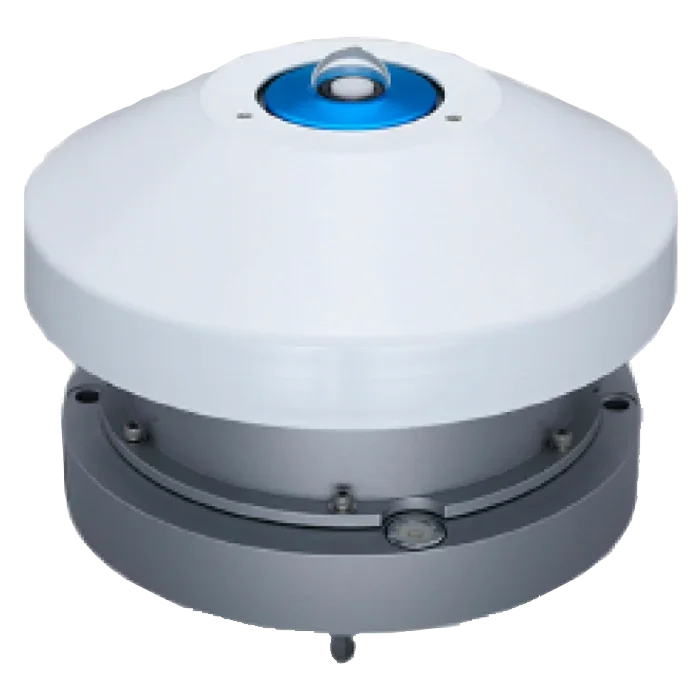
EKO Instruments MS-711

UV-VIS-NIR grating spectroradiometer

Measures the spectrum of the solar radiation reaching the ground, wavelength by wavelength, instead of giving a single total irradiance value. It shows what the light received here by a photovoltaic panel or a crop is made of, not just how much there is.

  • Spectral range 300 to 1100 nm (ultraviolet, visible and near infrared)
  • 0.4 nm step and a bandwidth of about 7 nm
  • Temperature-stabilised detector for permanent outdoor use
  • Installed in the EKO spectral station, next to the MS-713
Manufacturer’s datasheet
EKO MS-711 spectroradiometer: white dome with the blue optical window in the centre, on its metal base.
Image: EKO Instruments

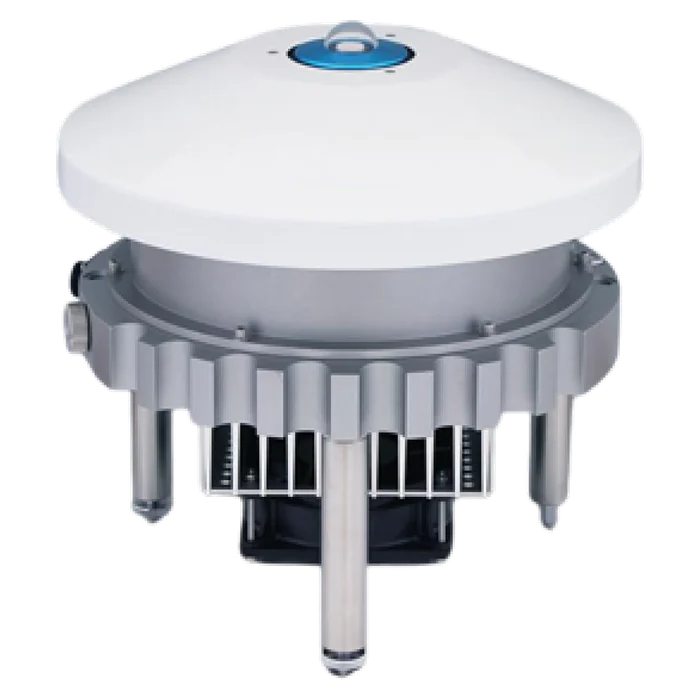
EKO Instruments MS-713

NIR grating spectroradiometer

Extends the spectral measurement into the infrared. Working together with the MS-711, the laboratory covers the solar spectrum from 300 to 2500 nm: practically all the energy the Sun delivers at the surface.

  • Spectral range 900 to 2500 nm (near infrared)
  • Together with the MS-711 it covers 300 to 2500 nm
  • Temperature-stabilised detector
  • Installed in the EKO spectral station, next to the MS-711
Manufacturer’s datasheet
EKO MS-713 spectroradiometer: white dome with a blue optical window on a finned cooling body.
Image: EKO Instruments

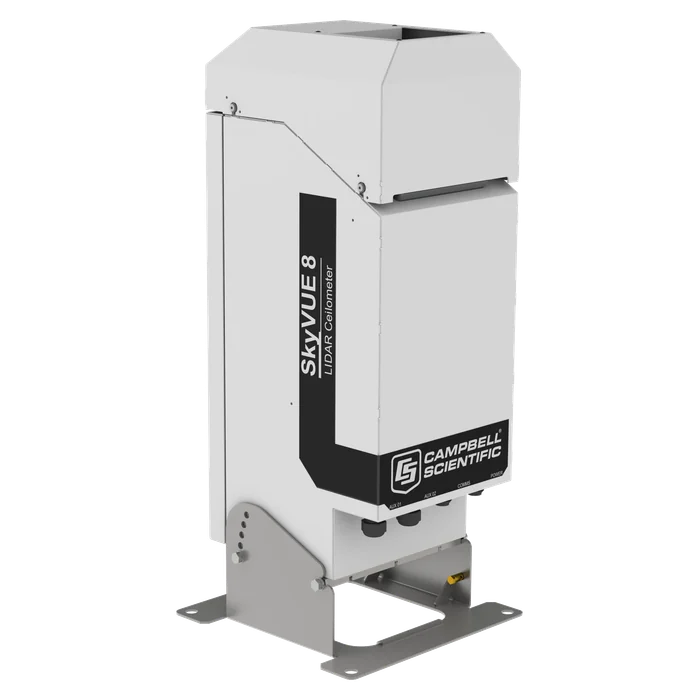
Campbell Scientific SkyVUE8

LIDAR ceilometer

Fires laser pulses upwards and measures what the atmosphere sends back. From that it determines the cloud base height and the vertical aerosol profile. It is the piece that links the laboratory's two fields: the cloud that hides the sun and the aerosol that pollutes the air come from the same data.

  • 8 km range for the backscatter profile
  • Detects up to five cloud layers and vertical visibility
  • Tilts up to 24° so the sun never enters the optics
  • Meets ICAO and WMO recommendations
Manufacturer’s datasheet
Campbell Scientific SkyVUE8 LIDAR ceilometer: white vertical housing on its tilting base, with the optical window at the top.
Image: Campbell Scientific

Inventory

All equipment

12 instruments, 4 of which were designed and built in the laboratory itself.

Measuring solar radiation

Instruments that measure how much energy arrives from the Sun and how it is spread across the spectrum. They are the basis for everything else.

  • EKO MS-711 spectroradiometer: white dome with the blue optical window in the centre, on its metal base.

    UV-VIS-NIR grating spectroradiometer

    EKO Instruments · MS-711

    Measures the spectrum of the solar radiation reaching the ground, wavelength by wavelength, instead of giving a single total irradiance value. It shows what the light received here by a photovoltaic panel or a crop is made of, not just how much there is.

    • Spectral range 300 to 1100 nm (ultraviolet, visible and near infrared)
    • 0.4 nm step and a bandwidth of about 7 nm
    • Temperature-stabilised detector for permanent outdoor use
    • Installed in the EKO spectral station, next to the MS-713
    Manufacturer’s datasheet
  • EKO MS-713 spectroradiometer: white dome with a blue optical window on a finned cooling body.

    NIR grating spectroradiometer

    EKO Instruments · MS-713

    Extends the spectral measurement into the infrared. Working together with the MS-711, the laboratory covers the solar spectrum from 300 to 2500 nm: practically all the energy the Sun delivers at the surface.

    • Spectral range 900 to 2500 nm (near infrared)
    • Together with the MS-711 it covers 300 to 2500 nm
    • Temperature-stabilised detector
    • Installed in the EKO spectral station, next to the MS-711
    Manufacturer’s datasheet
  • Pyranometer

    Kipp & Zonen

    Measures global solar irradiance on a horizontal surface. It is part of the radiation station and the reference instrument against which the sensors developed in the laboratory are checked.

    • Global solar irradiance measurement
    • Reference instrument for calibration

Atmosphere and meteorology

What lies between the Sun and the ground: clouds, aerosols and the meteorological variables that explain the other measurements.

  • Campbell Scientific SkyVUE8 LIDAR ceilometer: white vertical housing on its tilting base, with the optical window at the top.

    LIDAR ceilometer

    Campbell Scientific · SkyVUE8

    Fires laser pulses upwards and measures what the atmosphere sends back. From that it determines the cloud base height and the vertical aerosol profile. It is the piece that links the laboratory's two fields: the cloud that hides the sun and the aerosol that pollutes the air come from the same data.

    • 8 km range for the backscatter profile
    • Detects up to five cloud layers and vertical visibility
    • Tilts up to 24° so the sun never enters the optics
    • Meets ICAO and WMO recommendations
    Manufacturer’s datasheet
  • Automatic weather station

    Davis Instruments

    Continuously records temperature, relative humidity, pressure, wind and precipitation. Without these variables, a radiation or particulate matter reading is incomplete: it cannot be interpreted without knowing what the atmosphere was doing.

    • Temperature and relative humidity
    • Wind speed and direction
    • Atmospheric pressure and precipitation

Photovoltaic testing

An experimental installation and equipment to characterise modules and systems under real operating conditions.

  • Grid-connected photovoltaic system

    Experimental installation on the roof of the School of Physics. It is not a demonstration: it is the object of study behind the series on real performance, degradation and dust losses that the laboratory publishes.

    • 3.3 kWp: 12 modules of 275 Wp and a 3 kW inverter
    • Monitored continuously since installation
    • Experimental basis for several theses and publications
  • Current-voltage curve tracer

    Built here

    Characterises photovoltaic modules by measuring their full I-V curve, which gives the real maximum power and the module's state of health. Designed and built in the laboratory.

  • Maximum power point tracking system

    Built here

    Keeps a panel working at its optimum point as irradiance and temperature change. Developed in the laboratory, it is the basis of the dust-loss measurement technique the group patented.

Laboratory and characterisation

Bench equipment to characterise materials and for long-term tests.

  • UV-Visible spectrophotometer

    Shimadzu

    Determines how a material absorbs and transmits light. It is used to characterise thin films, cover glass for solar collectors and solutions.

    • Transmittance and absorbance measurement
    • Optical characterisation of thin films and glass
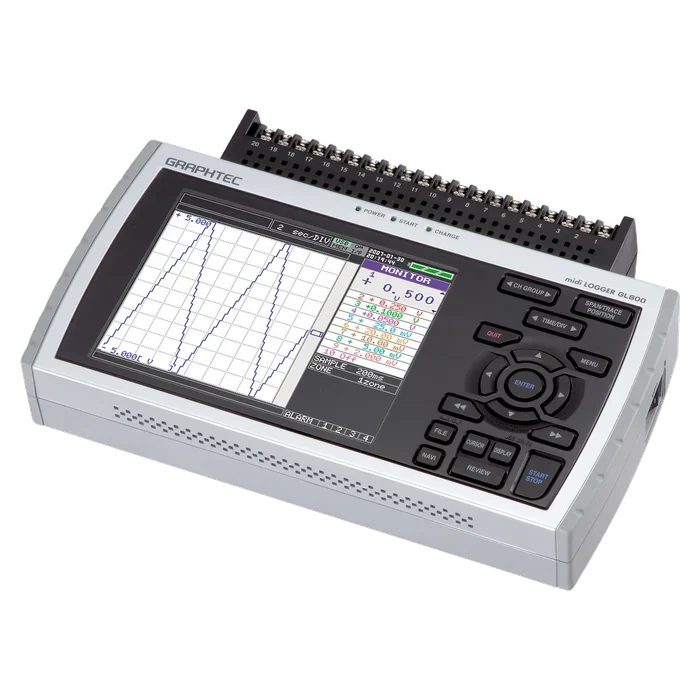
  • Graphtec midi LOGGER GL800: benchtop unit with a colour display, keypad and input terminal strip at the back.

    Data acquisition system

    Graphtec · midi LOGGER GL800

    Multichannel logger for long-term tests, where several signals have to be followed at once for days or weeks.

  • Solar water heater test bench

    Built here

    Tests solar water heating systems according to the Peruvian Technical Standard. Built in the laboratory.

Instruments developed here

When a commercial instrument falls short — because of price, power consumption or access — we build our own.

  • Low-cost autonomous sensors

    Built here

    A family of instruments designed and built here to measure where commercial instruments cannot go: sites without power, without coverage and hard to reach. They run for a year on one battery and are configured over USB.

    • Solar cell radiometer: 0 to 1500 W/m² with 1 W/m² resolution
    • Cup anemometer for wind resource assessment
    • Thermo-hygrometer with date and time logging
    • Particulate matter sensor based on infrared light scattering

Do you need to measure any of this?

The laboratory’s instruments are available for tests and measurement campaigns commissioned by third parties.